How to Choose a Diamond Engagement Ring

Oliver Brandt
October 20, 2026 · 5 min read · 900 words
Choosing an engagement ring is a big decision, and it is easier when you break it into a few clear steps. This guide walks you th…
Choosing an engagement ring is a big decision, and it is easier when you break it into a few clear steps. This guide walks you through the choices that matter most, in the order that makes sense, so you can buy with confidence.
Start with the person who will wear it
Before looking at diamonds, think about the wearer. Do they prefer classic or modern designs? Do they wear mostly gold, silver-toned or mixed jewellery? What does their daily routine look like? Someone who works with their hands, plays sport or travels often may prefer a lower, more secure setting. Clues from jewellery they already wear are usually more reliable than guesses. If you cannot ask directly, a close friend or family member often can help.
Set a realistic budget
Decide on a figure you are comfortable with before you start browsing. There is no rule that an engagement ring must cost a set amount, and the right number is the one that suits your finances. A clear budget helps you decide where to spend: on size, on quality, or on the setting. It also stops you being pulled towards options that do not fit.
Kohinoor Gems Recommendation
Explore this piece in the Kohinoor Gems store — lab-grown diamonds, free shipping over $250 and code WELCOME10 for 10% off your first order.
View in StoreChoose the diamond shape
Shape is the outline of the diamond, and it shapes the whole look of the ring. Round diamonds are the most traditional and are designed to maximise sparkle. Oval and pear shapes can look larger for their weight and elongate the finger. Emerald and Asscher cuts have a more architectural, mirror-like look. Cushion and princess shapes sit between classic and modern. Choose the shape that matches the wearer's taste, not the one that is simply popular.
Understand the 4Cs
Diamonds are graded on cut, colour, clarity and carat weight.
- Cut describes how well the diamond is proportioned and polished. It has the biggest influence on sparkle, so it is usually worth prioritising.
- Colour is graded on a scale from D (colourless) to Z (light yellow or brown). Many buyers choose in the near-colourless range, where the difference is hard to see once set in a ring.
- Clarity refers to natural internal features, called inclusions, and surface marks. Many diamonds with minor inclusions look clean to the naked eye.
- Carat is weight, not size. Two diamonds of the same carat weight can look different in size depending on shape and cut.
No single C is the right place to spend every time. Look at the diamond itself, not only the numbers.
Decide between natural and lab-grown
Both are real diamonds with the same chemical makeup and the same basic hardness. The difference is origin: natural diamonds form in the earth, while lab-grown diamonds are created in controlled conditions. Lab-grown diamonds are generally priced lower for comparable quality, which can allow a larger or higher-quality stone within the same budget. Natural diamonds are valued by many buyers for their origin and rarity. Neither choice is wrong; it depends on what matters to you. Our guide to lab-grown versus natural diamonds goes into more detail.
Pick the setting and metal
The setting holds the diamond and affects both style and durability.
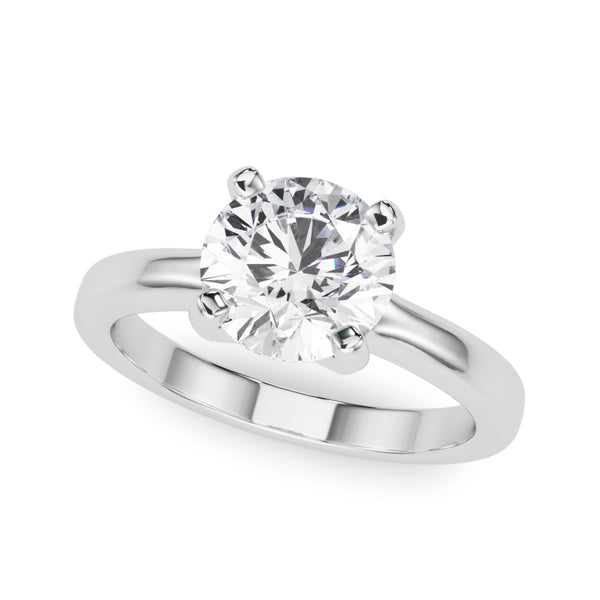
- Solitaire: a single diamond on a simple band; timeless and focused on the stone.
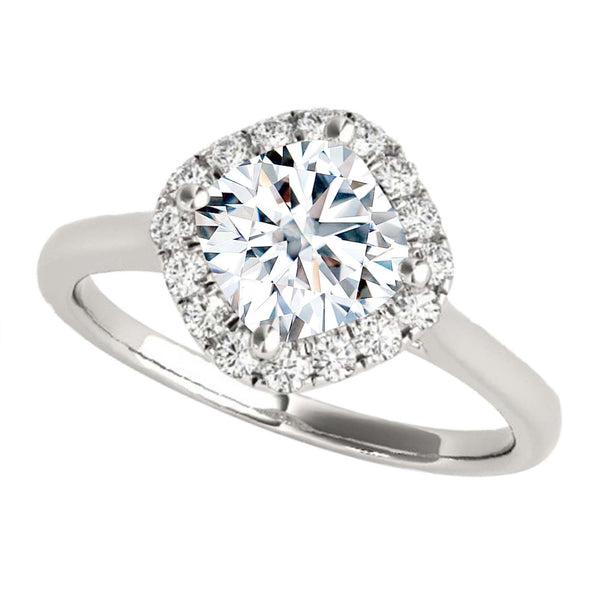
- Halo: a ring of smaller diamonds around the centre stone for added sparkle and presence.
- Three-stone: a centre stone flanked by two others; often chosen for its symbolism.
- Pavé or channel band: small diamonds set along the band for extra brilliance.
For metal, yellow gold, white gold, rose gold and platinum are all common. Consider skin tone, existing jewellery and how much maintenance you are happy with. White-toned metals may need occasional re-plating or polishing depending on the metal, so ask what care is involved.
Check certification and details
For a significant stone, ask for an independent grading report and confirm that it matches the diamond you are buying. Check the metal type and purity, the exact carat weight, and the return and resizing policy before you pay. A trustworthy seller will be happy to answer these questions clearly.
Get the size right
A beautiful ring that does not fit is stressful on the day. If you can, borrow a ring the wearer already wears on the correct finger and measure its inside diameter, or use our ring size guide. Many jewellers can resize a ring, but some designs, such as full eternity bands, are harder to alter, so check this first.
A simple way to decide
If you are stuck, work through this order: budget, shape, setting, then diamond quality. Choose the best cut you can afford, then balance colour, clarity and size around it. Look at images and, where possible, real videos of the exact ring rather than relying on specifications alone.
Ready to explore?
When you know your shape, setting and budget, you can compare options side by side. Browse our engagement ring collection to see styles in different metals and diamond types.
Frequently Asked Questions
Answers from the Kohinoor Gems gemology desk.
How much should I spend on an engagement ring?
There is no required amount. Choose a figure that suits your finances and priorities.
Is carat or quality more important?
Cut quality has the strongest effect on sparkle, so many buyers prioritise it before size. The best balance depends on personal preference.
Can an engagement ring be resized?
Many can, but it depends on the design and metal. Ask the seller before buying.