Diamond Cut, Colour, Clarity and Carat Explained

Amelie Krueger
October 20, 2026 · 4 min read · 795 words

The 4Cs are the standard way to describe and compare diamonds: cut, colour, clarity and carat weight. Understanding them helps yo…
The 4Cs are the standard way to describe and compare diamonds: cut, colour, clarity and carat weight. Understanding them helps you read a grading report, compare two stones fairly and decide where your budget does the most good.
Why the 4Cs exist
Every diamond is different. The 4Cs give buyers a shared language, so that a stone can be described and compared in a consistent way. They were popularised by the Gemological Institute of America (GIA) and are used widely across the industry, although grading laboratories can differ in how strictly they apply them.
Cut
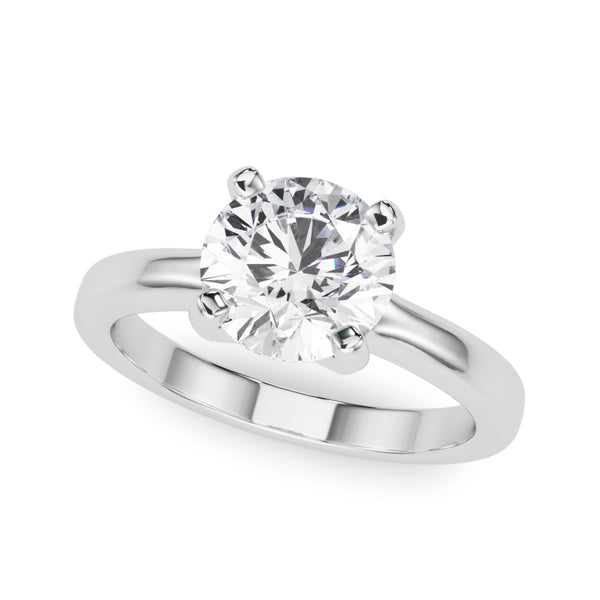
Cut is not the shape of the diamond. It describes how well the stone is proportioned, symmetrical and polished, which determines how it handles light. A well-cut diamond returns light through the top, creating brightness, fire and sparkle. A poorly cut diamond can look dull even when its colour and clarity grades are high.
For round brilliant diamonds, laboratories commonly give an overall cut grade, such as Excellent, Very Good, Good, Fair and Poor. Fancy shapes such as oval, pear or emerald do not always receive the same overall cut grade, so you will need to look at symmetry, polish and proportions, and ideally see the stone in motion. Because cut has such a strong effect on appearance, many buyers choose to prioritise it.
Kohinoor Gems Recommendation
Explore this piece in the Kohinoor Gems store — lab-grown diamonds, free shipping over $250 and code WELCOME10 for 10% off your first order.
View in StoreColour
Colour grading measures how colourless a white diamond is. The scale runs from D, which is colourless, to Z, which shows a light yellow or brown tint. Differences between neighbouring grades are subtle and often hard to see once the diamond is set, especially in a white-toned metal.
- D to F: colourless.
- G to J: near colourless; often a popular balance of appearance and value.
- K and below: a faint to noticeable tint that may be more visible in white metals.
Warm-toned metals such as yellow or rose gold can make a slightly warmer diamond look natural, which means you may not need the highest colour grade.
Clarity
Clarity describes the natural internal features, called inclusions, and surface features, called blemishes. The scale ranges from Flawless (FL) and Internally Flawless (IF) through Very Very Slightly Included (VVS1, VVS2), Very Slightly Included (VS1, VS2), Slightly Included (SI1, SI2) and Included (I1, I2, I3).
Most inclusions are microscopic. A diamond graded VS or SI can look clean to the naked eye, which is often called eye-clean, while costing less than a higher grade. The position, size and type of inclusion matter as much as the grade, so look at the plot on the report and at photographs or video of the stone.
Carat
Carat is a unit of weight. One carat equals 0.2 grams. It is not a direct measure of size, because the way a diamond is cut and its shape affect how large it looks from above. Two stones of the same carat weight can have different diameters.
Prices tend to rise sharply at popular weights such as 1.00 carat. A diamond slightly under a round number, for example 0.90 carat, can look nearly identical while costing less. Ask for the millimetre measurements as well as the carat weight.
How the 4Cs work together
No single factor decides quality. A large diamond with a poor cut may look less impressive than a smaller, well-cut stone. A colourless diamond with visible inclusions may be less attractive than a near-colourless, eye-clean one. The goal is a diamond that looks beautiful to you and fits your budget.
A practical approach is to choose the best cut you can afford, then choose colour and clarity at levels that look good in the metal you prefer, and finally pick the carat weight that fits what is left.
Beyond the 4Cs
Other details matter too. Check whether the diamond is natural or lab-grown, whether it has an independent grading report, and whether the report number matches the stone. Fluorescence, which is a glow under ultraviolet light, can also be listed on a report, and it may affect appearance in some stones.
Using the 4Cs when you shop
When comparing two diamonds, line up their reports and ask for clear images or video. Compare cut quality first, then colour, clarity and measurements. If something is unclear, ask the seller to explain. If you are choosing a ring, our diamond collections let you compare options in different styles and budgets.
Frequently Asked Questions
Answers from the Kohinoor Gems gemology desk.
Which of the 4Cs matters most?
Cut has the greatest effect on sparkle, so it is often prioritised, but the best choice depends on your preferences.
Do lab-grown diamonds use the 4Cs?
Yes. Lab-grown diamonds are graded using the same characteristics.
What does eye-clean mean?
It means no inclusions are visible without magnification when the diamond is viewed normally.