Gemstone Jewellery Buying Guide 2026
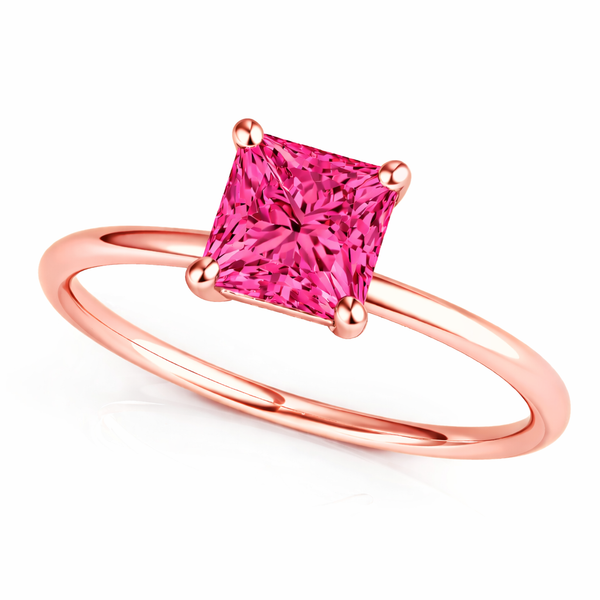
Coloured gemstones bring warmth, character and individuality to fine jewellery in a way that white diamonds alone never quite can. A vivid ruby, a rich emerald or a deep sapphire turns a piece into a statement of personal taste \u2014 and, with careful selection, an enduring investment. Yet buying coloured stones can feel daunting, because their value depends on subtleties of colour, clarity, origin and treatment that are easy to misunderstand. This gemstone jewellery buying guide was written to change that, giving you the knowledge to choose ruby, emerald and sapphire \u2014 and the wider gemstone world \u2014 with confidence in 2026. A solitaire ruby engagement ring in rose gold, like the one Kohinoor Gems sets, is a perfect place to begin.
Why Gemstone Jewellery Is Worth Buying
There is something quietly compelling about a piece of jewellery anchored by colour. A gemstone catches the eye differently in daylight and lamplight, and it carries associations \u2014 of birth months, anniversaries, weddings and favourite hues \u2014 that give it personal resonance. Unlike trend-driven designs, a well-chosen coloured stone remains relevant for decades because its beauty is rooted in nature rather than fashion.
Gemstones also reward a discerning buyer. Value in the coloured-stone world is driven by rarity and quality of colour more than size alone, which means a modest but exceptional stone can hold its worth remarkably well. Whether you are choosing a piece for yourself or as a gift, beginning with an understanding of the classic stones, their quality factors and their suitability for daily wear will serve you far better than buying on impulse. Our birthstone guide pairs naturally with this one for anyone considering a meaningful coloured stone.
The Big Three: Ruby, Emerald and Sapphire
When jewellers speak of "the big three", they mean ruby, emerald and sapphire \u2014 the coloured stones most prized since antiquity, largely due to their rich, saturated colours and (for ruby and sapphire) exceptional hardness. Each deserves its own consideration.
Ruby is the red variety of the mineral corundum. The finest rubies show a vivid, pure red \u2014 often described as "pigeon's blood" \u2014 and command premium prices. Rubies are extremely hard (9 on the Mohs scale), making them superb for everyday rings and earrings. Because fine rubies are rare, most on the market are heat-treated to deepen and clarify their colour, which is widely accepted practice.
Sapphire, also corundum, is famous in blue but occurs in nearly every colour (the other colours are often called "fancy sapphires"). Blue sapphires range from pale to deep royal blue, with the most valued showing a rich, velvety saturation. Like rubies, most sapphires are heat-treated. The durable sapphire is a September birthstone and an enduring favourite for engagement and everyday pieces.
Emerald is the green variety of the mineral beryl. Its lush green colour is prized, but emeralds frequently contain eye-visible inclusions called jardin, and most are oiled or resin-filled to reduce their visibility \u2014 both factors you should know about before buying. At 7.5 to 8 on the Mohs scale, emerald is reasonably hard but brittle, so a protective bezel or guarded setting is often wise. Explore all gemstone jewellery at Kohinoor Gems to see how these classics are worn.
Other Coloured Gemstones Worth Knowing
Beyond the big three, a rich world of coloured stones offers beauty at more accessible prices and in colours the classics cannot match. Amethyst (a violet quartz) and citrine (a golden quartz) are affordable, durable February and November favourites. Garnet, a January birthstone, appears in deep reds and many other hues. Aquamarine (March) brings a tranquil pale blue, while peridot (August) offers a fresh olive green.
More unusual stones reward the curious. Tanzanite, found only in Tanzania, shows a striking blue-violet and remains a relative newcomer prized for its rarity. Tsavorite, a green garnet, offers emerald-like colour with greater durability. Spinel, available in vivid reds and blues, is increasingly appreciated as a lower-profile alternative to ruby. Each of these stones adds a different personality to a piece, and our complete birthstone resource helps you connect a stone to a person or occasion.
Gemstone Quality: The Four Cs
Just as diamonds are judged by the four Cs, so are coloured gemstones \u2014 though the emphasis shifts. For coloured stones, colour is overwhelmingly the most important factor, often accounting for the bulk of a stone's value. You want the most vivid, even, saturated colour the stone can offer: a rich royal blue for sapphire, a pure pigeon's blood red for ruby, an intense medium green for emerald. Larger is not automatically better; a smaller, richly coloured stone usually outvalues a larger washed-out one.
Clarity matters more for some stones than others. Emeralds are expected to contain inclusions, so small inclusions are tolerated if they do not weaken the stone. Ruby and sapphire should look clean to the eye, though minor inclusions are normal. Cut is crucial to brilliance \u2014 a well-cut stone returns light evenly and shows its colour to best effect, while a poor cut can dull even a fine stone. Carat weight influences price, but colour and cut drive it more for coloured gems. Our first diamond purchase guide explains how the four Cs apply to a similar luxury purchase.
Durability for Daily Wear
Choosing a gemstone for a ring, pendant or pair of earrings should begin with hardness and toughness, not just beauty. The Mohs scale ranks scratch resistance from 1 (talc) to 10 (diamond), and it is the first guide to how a stone will cope with daily life. Tougher stones handle knocks well; harder stones resist scratches but can still chip if brittle.
| Stone | Mohs Hardness | Everyday Wear | Best Use |
|---|---|---|---|
| Diamond, Ruby, Sapphire | 9\u201310 | Excellent | Rings, studs, bracelets |
| Topaz, Aquamarine | 8 | Very good | Rings, pendants, earrings |
| Amethyst, Citrine, Garnet | 6.5\u20137 | Good | Daily wear with care |
| Emerald, Peridot | 6.5\u20138 | Fair to good | Protective settings, occasional wear |
| Opal, Pearl, Turquoise | 2.5\u20136.5 | Delicate | Pendants, occasional wear |
For engagement rings and pieces worn daily, ruby, sapphire and diamond are the safest choices; for softer stones, a protective setting and thoughtful wear keep them beautiful.
Natural, Lab-Grown and Simulated
Three distinct categories exist in the gemstone market, and understanding them prevents confusion \u2014 and disappointment. A natural gemstone formed in the earth over millions of years; rarity and origin heavily influence its price. A lab-grown (or synthetic) gemstone has the same chemical composition, crystal structure and physical properties as a natural stone but was created in a laboratory, making it far more affordable and easier to source ethically. A simulated stone, such as cubic zirconia, only mimics a gem's appearance and is not the same material at all.
None of these is inherently "good" or "bad" \u2014 they suit different budgets and priorities. The key is full disclosure: always ask whether a stone is natural, lab-grown or simulated, and ensure it is described on your receipt and certificate. Buyers increasingly value lab-grown stones for their combination of beauty, value and ethical clarity, as our luxury jewellery trends guide discusses.
Treatments, Settings and Metal
Most coloured gemstones on the market are treated to improve their appearance, and this is normal, accepted practice \u2014 as long as it is disclosed. Rubies and sapphires are commonly heat-treated to deepen colour and clarity; this is generally permanent and stable. Emeralds are typically oiled or resin-filled to reduce the visibility of fissures, a treatment that can require occasional re-oiling. Always ask what treatment a stone has received and how durable it is, and handle treated stones according to their needs.
Setting and metal choice round out the equation. Protect softer stones with bezels or stone-guarded mounts, and reserve open prong settings for hard stones such as ruby and sapphire. Yellow gold warms red, green and blue stones; rose gold adds romance (making it lovely with ruby); white gold or platinum flatters cooler tones. The solitaire ruby ring in rose gold demonstrates how metal and stone work together to frame a gem's best face.
Budget Guidance and Buying Safely
Let colour lead your budget. Because colour is the single most important driver of value and beauty, the wisest advice is: choose the most vivid, saturated stone your budget allows, even if it means a slightly smaller carat weight. A smaller, brilliant-carat sapphire or ruby far outshines a larger, pale one, and will serve you better for years.
To buy safely, always purchase from a reputable jeweller who discloses treatments, origin (where relevant) and whether a stone is natural, lab-grown or simulated. Ask for written documentation on your receipt, and, where possible, a certificate from a recognised gemmological laboratory for higher-value stones. Be wary of unusually cheap "rubies" or "emeralds" \u2014 price is a strong signal of what a fine natural stone genuinely costs. Our guide to gifting jewellery well offers further advice on making a wise choice for someone special.
Caring for Gemstone Jewellery
Once you own a beautiful gemstone, a little knowledge keeps it beautiful. Hard stones like ruby, sapphire and diamond are robust, but softer stones and treated gems need gentler handling. Clean most gemstones with warm water, mild soap and a soft brush, and avoid ultrasonic cleaners for emeralds, opals, pearls, turquoise and many treated stones, which can be damaged by heat or vibration.
Store each piece separately to prevent scratching, remove jewellery before chores, swimming and exercise, and keep pieces away from perfume, lotion and household chemicals. Have settings and prongs checked occasionally so stones stay secure. With considered care, your gemstone jewellery \u2014 whether a gemstone earring or a gemstone bracelet \u2014 will remain a source of joy for a lifetime.
Buying gemstone jewellery is an act of education and confidence: know your stone, understand its quality, and choose an honest seller. Do so, and a ruby, emerald or sapphire piece becomes an heirloom in the making. Discover fine gemstone jewellery from Kohinoor Gems, or continue exploring in our full blog index. Find your ideal piece \u2014 perhaps a solitaire ruby in rose gold \u2014 and wear it with confidence.