Birthstone Jewelry: The Complete Guide to All 12 Birthstones

By Grace Williams2026-08-2911 min readEarrings
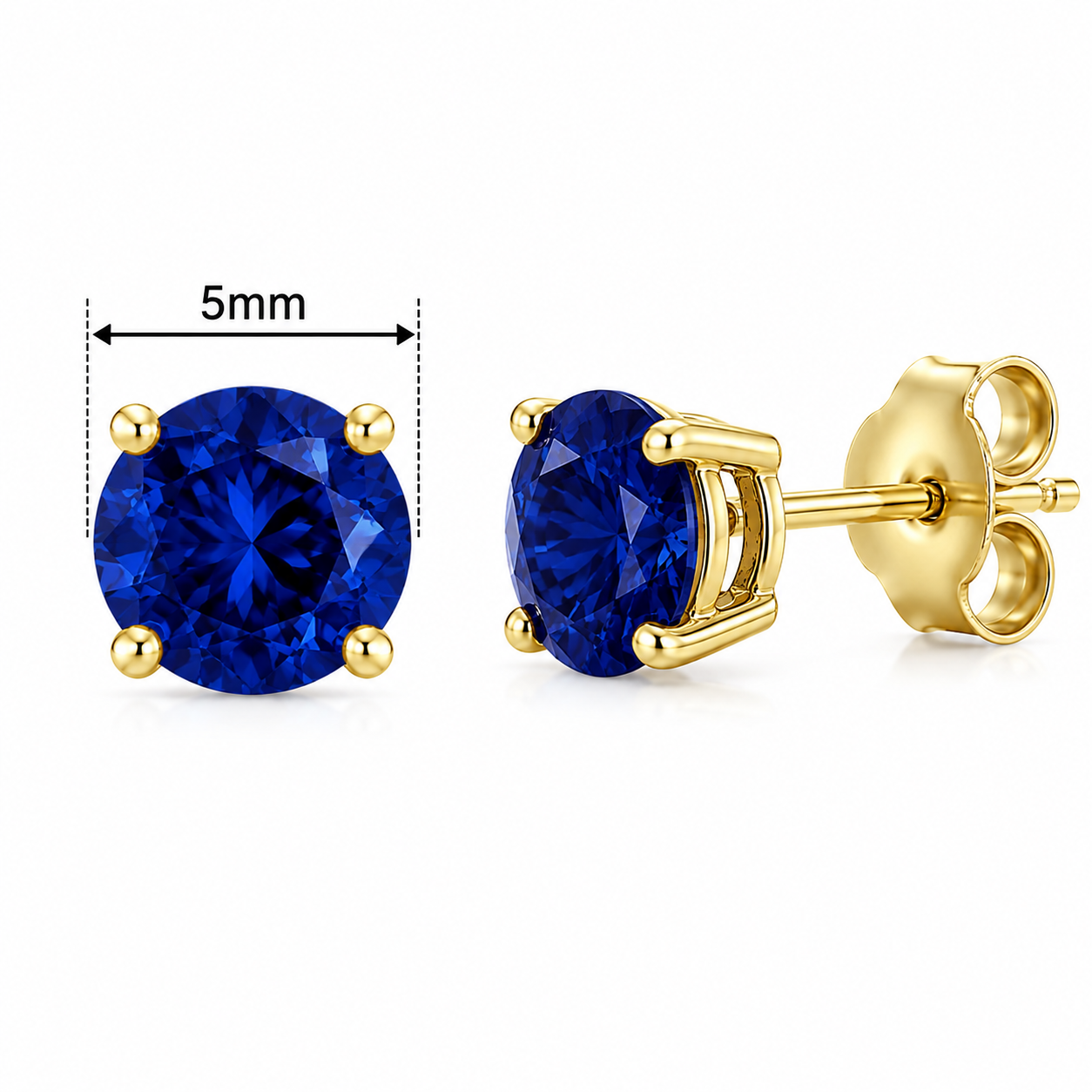
Round sapphire birthstone stud earrings in 14k solid yellow gold — Kohinoor Gems

Few gifts carry the quiet intimacy of a birthstone. Whether marking a newborn's arrival, celebrating a milestone birthday or simply choosing a stone that echoes your own month of birth, birthstone jewelry blends colour, meaning and personal history in a single fine piece. This birthstone jewelry guide walks you through all twelve traditional birthstones, the modern alternatives that enrich each month, and how to choose, style and care for pieces that will be treasured for a lifetime. Because birthstone jewellery speaks to identity, the choices you make \u2014 of stone, metal and setting \u2014 become a reflection of the person who wears them. Round sapphire birthstone studs in 14k gold, like those Kohinoor Gems crafts, capture that spirit beautifully.

What Is a Birthstone?

A birthstone is a gemstone traditionally associated with the month of a person's birth. The practice has ancient roots, with links to breastplate lists and astrological beliefs that connected particular stones to particular months. Over centuries, these associations crystallised into the familiar calendar we know today, and gifting a birthstone became a way to mark a birth, name-day or milestone with a personally resonant stone.

It is worth being clear from the outset: the meanings and powers traditionally attributed to birthstones are matters of folklore and long-held tradition, not scientific fact. What the tradition does offer, however, is genuine emotional value. A stone chosen for a shared history, a birthday or a child's name carries a warmth that no mass-produced piece can replicate. For many, that is reason enough to wear one, and it makes the birthstone one of the most meaningful categories in all of fine jewellery.

All 12 Birthstones by Month

Each month has a traditional stone and palette. Here is the classic list, with a note on what makes each one special. Kohinoor Gems offers many of these stones in solid gold settings, from stud earrings to pendants and rings.

The 12 Traditional Birthstones by Month
MonthTraditional StoneTypical PaletteMohs Hardness
JanuaryGarnetDeep red6.5\u20137.5
FebruaryAmethystViolet / purple7
MarchAquamarinePale blue7.5\u20138
AprilDiamondWhite / colourless10
MayEmeraldRich green7.5\u20138
JunePearlWhite / cream2.5\u20134.5
JulyRubyVivid red9
AugustPeridotOlive green6.5\u20137
SeptemberSapphireBlue9
OctoberOpalRainbow play of colour5.5\u20136.5
NovemberTopazGolden yellow8
DecemberTurquoiseSky blue5\u20136

Because many of these stones are gorgeous in stud earrings, pendants and rings, a traditional birthstone is a versatile choice for daily wear. The birthstone earrings at Kohinoor Gems, for example, bring sapphire and other stones into a polished, everyday form.

Modern Birthstone Alternatives

Alongside the traditional list sits a modern one that adds more readily available stones for several months. June, for instance, is equally associated with alexandrite \u2014 a colour-changing stone \u2014 alongside pearl. October offers tourmaline in a spectrum of colours beside opal. November adds citrine, a bright golden stone, alongside topaz. And December is often paired with tanzanite and zircon in addition to turquoise.

These modern alternatives matter because they give you more room to choose a stone that fits your budget, your colour taste and the durability you need. A June baby who finds pearl too soft for daily wear might prefer the harder alexandrite; a December baby who loves deep blue rather than sky blue might choose tanzanite. There is no wrong choice \u2014 both lists are respected \u2014 so your decision can rest on personal preference rather than obligation. For a deeper look at how to evaluate coloured stones, our gemstone jewellery buying guide is a helpful companion piece.

How to Wear Birthstone Jewelry

Birthstones suit nearly every type of jewellery, which makes them wonderfully flexible. For the most versatile, timeless choice, many people begin with stud earrings or a small pendant \u2014 pieces that can be worn daily, alone or layered. A birthstone ring offers a personal flourish on the hand, while a bracelet turns a grandmother's list of grandchildren into a wearable, meaningful narrative.

Think about how the stone will sit in your wardrobe. A vivid sapphire or ruby pairs beautifully with both casual and formal looks, while a pale aquamarine or pearl leans toward softer, more delicate styling. When combining several birthstones, keep the metal consistent \u2014 matching yellow gold helps a rainbow of stones feel like one considered design rather than a clutter of colours. For inspiration across styles, our jewellery for every occasion guide shows how personal pieces move from day to evening.

Layering also works for birthstones. A thin chain bearing one child's birthstone can be worn beside another bearing a second child's, or a stack of rings can hold the stones of each family member. The result is far more than decoration \u2014 it is a daily reminder of the people who matter most.

Combining Birthstones in Family Jewelry

One of the most heartfelt uses of birthstones is combining them to represent a family. A mother might wear her three children's birthstones as a charm pendant or bracelet; a grandparent might keep a grandson's and granddaughter's stones as paired studs. Because each stone stands for a real person, the finished piece becomes a kind of wearable family tree, and its sentimental value only deepens with time.

When combining several stones, thoughtful design keeps the piece elegant. Limit the number of stones so the design stays balanced, choose stones with complementary colours, and let the gold setting unify them. Simplicity is often the mark of taste \u2014 a single shared chain with well-spaced charms often reads more refined than a crowded arrangement. If you are gifting such a piece, this is also the moment to think about personalised jewellery for gifts, which remains one of the most cherished ways to show someone they are loved.

Choosing Metals and Settings

The metal and setting you choose can dramatically affect how a birthstone looks and how long it lasts. Yellow gold warms up rich reds, greens and blues, while white gold or silver flatters cooler-toned stones and bright white pearls. Rose gold adds a romantic blush that suits many pastel and violet stones.

Durability matters too. Hard stones such as sapphire, ruby, diamond and topaz tolerate open settings such as four-prong studs or halo rings. Softer stones such as opal, pearl, turquoise and peridot benefit from protective settings \u2014 a bezel, a surround of small stones or a recessed mount \u2014 that shield them from knocks. When in doubt, ask a jeweller about the safest way to set the specific stone you have chosen. Our gold jewellery buying guide offers useful background on selecting metal quality and weight.

For a versatile, everyday birthstone piece, a solid gold stud earring or pendant is hard to beat. The four-prong sapphire studs from Kohinoor Gems are a fine example of how a classic setting lets the stone shine safely through years of wear.

Caring for Birthstone Jewelry

Different birthstones need different care, so knowing your stone's hardness is the first step to keeping it beautiful. Diamond, sapphire, ruby and topaz are tough enough for ultrasonic or steam cleaning in professional hands. Softer stones are best cleaned gently with warm water, mild soap and a soft brush, and should never be exposed to harsh chemicals or sudden temperature changes.

Pearl and opal are particularly delicate: store them away from other pieces to avoid scratching, keep them from perfume and lotion, and have them restrung or reset periodically by a jeweller. Remove all jewellery before chores, exercise and swimming, and store each piece separately in a soft pouch or lined box. With thoughtful care, a well-made birthstone piece \u2014 whether a gemstone bracelet or a pair of studs \u2014 will remain a treasured companion for decades.

Birthstones turn personal history into something you can wear, and they remain one of the most meaningful gifts in all of fine jewellery. Whether you are choosing your own stone, marking the arrival of a child or building a family conversation piece, let the stone reflect the person, not the occasion. Discover fine birthstone jewellery from Kohinoor Gems, or browse more ideas in our full blog index. Find the stone that means something to \u2014 and for \u2014 the person who will wear it, from round sapphire studs in yellow gold.

Frequently Asked Questions

What are the 12 traditional birthstones in order?
In order of month, the traditional birthstones are garnet (January), amethyst (February), aquamarine (March), diamond (April), emerald (May), pearl (June), ruby (July), peridot (August), sapphire (September), opal (October), topaz (November) and turquoise (December). Some months have accepted alternate stones, such as alexandrite for June and tanzanite for December.
How durable are birthstones for everyday wear?
Durability depends on hardness. Diamonds, sapphires and rubies score 9\u201310 on the Mohs scale and easily handle daily wear. Amethyst, topaz and garnet (7\u20138) are safe for frequent use. Emeralds, opals, pearls and peridot (5\u20137.5) are softer and need greater care, making them better suited to occasional wear or protective settings.
Can I wear more than one birthstone?
Yes. Many people combine their own birthstone with those of children, partners or parents to create design piece with personal meaning. Multi-stone earrings, stacked rings, charm pendants and family bracelets are popular ways to blend several birthstones harmoniously in a single fine jewellery design.
What is the difference between traditional and modern birthstone lists?
The traditional list dates back centuries and is tied to historical gemstone lore. The modern list, popularised in the twentieth century, adds more readily available stones such as alexandrite, tanzanite and citrine. Both lists are equally respected, so you can choose whichever stone resonates more with you.
Are birthstone meanings scientifically accurate?
No. The meanings and powers associated with birthstones rest on folklore and centuries-old tradition, not science. However, the custom of gifting a birthstone is a warm, personal way to mark a birth or milestone, and the stone chosen can hold genuine sentimental value for the wearer.
Is a birthstone ring suitable for an engagement ring?
Yes, especially if durability is considered. A sapphire, ruby or a hard gemstone like a topaz can be set as a centre stone in an engagement or promise ring. Pairing a coloured birthstone with smaller diamonds is an increasingly popular, personal and distinctive alternative to a classic white solitaire.
How do I choose between two birthstones for the same month?
Choose based on colour preference, durability and personal meaning. For example, June offers pearl and alexandrite, October offers opal and tourmaline, while December offers turquoise, tanzanite and zircon. Consider how often you will wear the piece and whether the softer option can be set protectively, then pick the stone you love most.